Monday, April 23, 2012

Podcasting Made Easy

In the modern world, full of mp3 players and smartphones, time doesn't have to be lost during travel to and from school or work.  Now, anyone with internet access and an mp3 player can fill that lost time on the bus or train with news or other shows that interest them.  All you have to do is subscribe to a podcast you like, and new episodes will add themselves when you dock your mp3 player.  So essentially, you could be watching a new episode every morning!

I found a great ESL Podcasting site, called ESL Pod.  I have attached a link to a specific podcast about political ideologies from their site.  I found it very interesting.

http://www.eslpod.com/website/show_podcast.php?issue_id=11812486

Podcasts can come from other places too, like the iTunes Store in Apple iTunes.  Apple makes it exceedingly easy to find podcasts you find interesting, and subscribe to them.  It will even queue new episodes for you and upload them to your iPod when you sync it. 

Podcasting is a great way to find new shows that fit into your busy daily life, and stay connected with people and ideas from around the world!

Monday, April 16, 2012

ePals and Global Collaboration

ePals is a web community that focuses on projects that are open for collaboration and have far-reaching implications. They use a common forum format to allow multiple threads within the project topics. There are resources for teachers and students alike, which help with the collaborative process, and provide a jumping-off point for research on the project topics. When someone starts a thread within a project, they can connect with other classrooms elsewhere in the world, and students can connect with other students to share ideas, develop concepts, solve problems, and collaborate on projects.

Some of the projects focus on sharing culture, thus promoting tolerance and understanding in an ever-shrinking world. These projects include focuses on holidays and festivals throughout the world, storytelling in different cultures, and why we are who we are. Other projects include maps, weather, global warming, and natural disasters, which are all topics that affect everyone around the world in different ways.

I would surely be able to use this site to help connect my future EFL classes with kids back here in America. I would pick a project that pertains to the vocabulary or theme of the current chapter, and have the two classes provide their own culture's input into the problem solving portion of the project. The project would culminate in each class presenting a powerpoint or video recoding to the other class and showing what they learned and how they learned from each other.

Monday, March 5, 2012

Twitter is dumb

Twitter can be useful for people staying up with the latest fashion trends, celebrity gossip, trivial knowledge, and even breaking news. Despite these awesome pros of using twitter, if you don't have a smartphone, it's pointless. The information that is posted on twitter is only relevant for people who sit and stare at their twitterfeed 24/7/365.

That being said, there is one way to cheat twitter's adhd inducing characteristics that can make it a useful tool for educators and other professionals; provided they have a smartphone... Tweets can be tracked, (as mentioned in the "28 Creative Ways Teachers are Using Twitter" article, 28 Creative Ways teachers are using Twitter) to discover trends and to see students' and other teachers' progress and findings.

Other than this, however, the rest of the article seems to suggest classroom-disrupting and distracting behaviors for the 21st century student. I hope I am not hurting anyone's feelings by taking this stance, but tweeting the answers to questions in the middle of class seems to be detrimental to the learning process. I feel that if the teacher and students are meeting in a classroom on a regular basis, it stands to reason that the students ought to be expected to raise their hands to answer a question posed. Also, God forbid a student should have to use a pen and paper to take a quiz or test.

There is one bright spot to all of this... I found in Using Twitter as an Educational Tool that Twitter is a great way for connecting students in countries around the world, and providing a place where they can discuss topics and share ideas.  The example that I thought was truly ingenious was that Twitter is the perfect online platform to tell collaborative stories, using posts from kids anywhere in the world.  Since they are limited to 140 characters, everyone has an equal say in the development of the tale.

I understand that Twitter can be helpful for someone with enough technology on-hand to look like an 80's action movie villain, but for most people, especially in the ESL field, money isn't the most plentiful thing in life, and twitter may be a bit unreasonable for the classroom. That being said, the opportunity for the exchange of new ideas and classroom activities is endless, and for a teacher making a lesson plan, or seeking help on how to reach a struggling pupil, Twitter may just provide you with some quick answers.

Monday, February 20, 2012

Social Networks FTW!

Howdy readers! TESOL EVOnline is a cool Yahoo Group site dedicated to ESL/EFL where teachers and enthusiasts can post helpful and interesting things to share! They can also reply to things others have posted. This type of networking site speeds up the process of idea --> sharing. We've come such a long way from communication with tin cans and a string, haven't we?!

A Learner is Like...

A learner is like a vacuum.  Always taking in new information at a blistering pace can make your head spin, but the way we live now has shaped the way we pick up new things.  Ample information and knowledge also comes with a sizable amount of garbage.  The only problem with all of the knowledge around us is how do we know what's important, and better yet, what is going to be important tomorrow, or the next day?  A learner has a filter that may need to be emptied of all of the excess crap once in a while, but in addition to the new version of humans' affinity for everything noteworthy, this filter is capable of weeding out what's important, to themselves at least.  With a HEPA-like filter on board, humans are becoming proficient at finding the big news, and remembering it.  But where does our brain go, naturally, for all of this knowledge, you ask? George Siemens says in The Impact of Social Software on Learning: "It really boils down to our ability to have a dialogue."  This relates to the vacuum model because our social interaction, (the basis of Socio-cultural learning theory), is the shag carpet that our cranial Kirby scours every waking moment. 


When social networking first started to get big, people could learn from their friends even when their friends weren't literally teaching.  A person could all of a sudden share things with anyone they associate with, all the time! Someone you once knew could now make a comment on line, and very out in the open, which you might read immediately, or even days or weeks later, that could change the way you think, act, or even do your job.  Karen Stephenson says in Connectivism: A Learning Theory for the Digital Age by George Siemens: "Since we cannot experience everything, other people’s experiences, and hence other people, become the surrogate for knowledge."  By this she says expertly that everyone we know has now become everything we know.  


Monday, February 13, 2012

Great list of tech tools for educators!

One of the blogs I follow on Google Reader has a particularly interesting and, (I believe), helpful list of online tools that can be utilized in such a way as to promote learning in and out of the classroom setting.

One that I found especially interesting is called Scrumblr, and can be found at scrumblr.ca! This tool is so epic that it acts as a virtual dry-erase board which can be accessed remotely as if in a classroom collaborative setting!

So without further ado, here's the list I found on Teaching Generation Now:

50 educational tech tools list

Monday, February 6, 2012

21st Century Education in New Brunswick

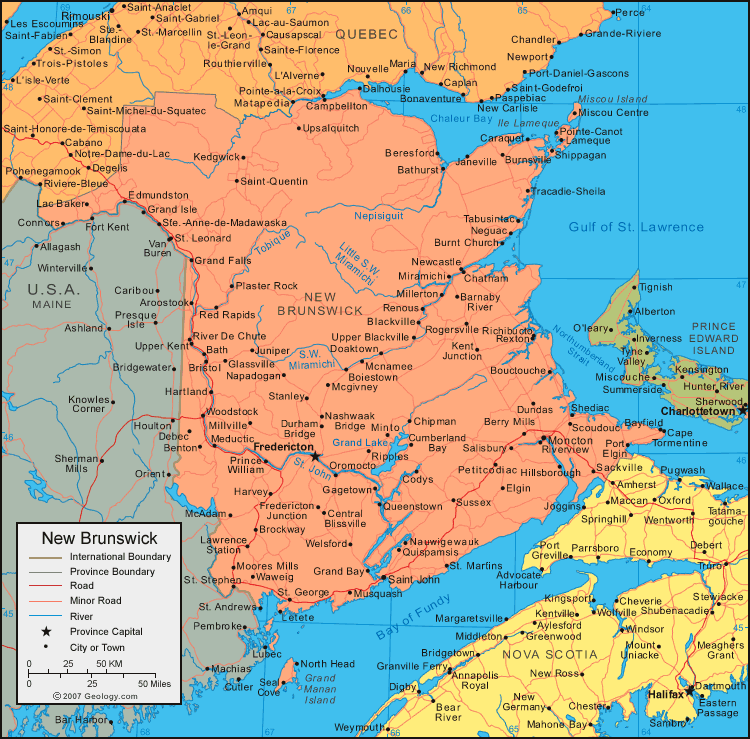
New Brunswick, Canada

This video was very enlightening! I learned a lot of things about how quickly the world is advancing today, and how we must make sure that our children's education is not only keeping up, but putting them ahead of the curve. The most striking fact that the video presented was that the top 10 jobs today didn't exist in 2004. I found this to be astonishing, and rather scary. I hope that by harnessing technology, we can allow kids to be the wave, rather than just hold on for dear life. I also hope to make it so that New Brunswick isn't the only place in the world where kids are provided with this opportunity!

21st Century Education in New Brunswick